By Dr. Jarrod Sadulski | 09/24/2026
The Bachelor of Arts in Criminal Justice at American Military University part of American Public University System (“AMU”) is not designed to meet the educational requirements for professional licensure or certification in any country, state, province, or other jurisdiction. This program has not been approved by any state professional licensing body and does not lead to any state-issued professional licensure. For further information on professional licensing requirements, please contact the appropriate board or agency.
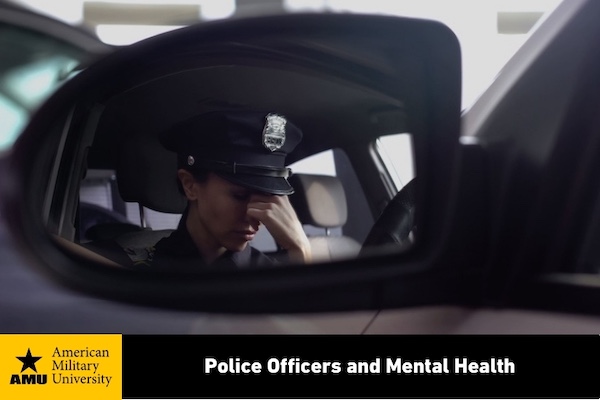
Police officers and mental health are receiving greater attention today than ever before and for good reason. Behind every emergency call, crime scene, and critical incident is a police officer repeatedly exposed to stress and trauma that accumulate over the course of a career.
Law enforcement agencies have made meaningful progress in recognizing these challenges. However, the long-term effects of police work on mental and physical well-being remain a critical concern for officers, their families, and the communities those officers serve.
One area where law enforcement officers still struggle is managing the mental health challenges that accompany this profession. Repeated exposure to traumatic events, elevated cortisol levels, hypervigilance that carries into off-duty hours, and the cumulative effects of police stress can all contribute to long-term psychological and physical health concerns.
Why Police Officers Experience Chronic Stress
The general population likely does not understand the trauma and stress officers experience on a routine basis. During an average shift, an officer may respond to an emergency call that places police officers or citizens in imminent danger.
This type of situation causes a sudden escalation in the body’s stress response, releasing stress hormones such as adrenaline and cortisol. These stress hormones increase an officer’s heart rate and trigger other physiological changes. Although these responses are critical during emergencies, repeated activation of these hormones over time can take a significant toll on an officer's physical and mental well-being.
Cortisol initially causes an officer to have a heightened state of alert and focus on the immediate threat. However, the consistent release of cortisol has adverse physical and physiological effects on the body over time, which can result in obesity and other health problems.
Police Officers and Occupational Stress
While exposure to traumatic events such as graphic crime scenes and car accidents can impact officer mental health, occupational stress from a law enforcement agency is often a major stressor as well.
Stressors within police organizations involve:
- Toxic leadership
- Internal departmental issues
- Pressure to meet unrealistic job tasks
- Personnel shortages
- Mandatory overtime
- A lack of agency support after a traumatic incident
This stress is often coupled with missing sleep due to shift work, media and public scrutiny, and difficulty managing an effective work-life balance. Dealing with crimes against children and child abuse is often a major stressor that can impact the mental health of officers, especially for those officers who have children around the same age as victims.
The effects of chronic stress extend beyond personal well-being. According to recent research, 83% of police officers report that mental health challenges negatively affect their work, highlighting how untreated stress can affect decision-making, officer performance, and ultimately public safety.
Long-Term Impacts of Police Stress on Officers’ Mental Health
While the awareness of mental health challenges in law enforcement has increased, more attention is still needed. Police stress that is not properly managed will have an adverse impact on the officer’s long-term physical health, mental health, and relationships with loved ones.
Research shows that police officers have higher rates of suicide––they are 54% more likely to commit suicide than the general population. In addition, more police officers die by suicide each year than in the line of duty, underscoring the importance of recognizing the warning signs of a suicide risk early and ensuring officers have timely access to mental health services.
Officers and loved ones should monitor for suicidal ideation, which should immediately be addressed through encouraging an officer to seek mental health services.
The chronic stress associated with law enforcement careers can result in both physical and mental health issues, such as:
- Cardiovascular disease
- Substance abuse
- Metabolic disorders
- Stomach problems
- Post-Traumatic Stress Disorder (PTSD)
PTSD is sometimes the result of repeated exposure to traumatic events and can manifest itself in different ways. For some, it can result in unpleasant flashbacks or nightmares about traumatic events, which can negatively impact officer mental health or progress to mental illness.
Warning Signs of Mental Health Challenges in Police Officers
There are several indicators of occupational stress that should be closely monitored by law enforcement officers and their family members. For example, an officer experiencing mental stress may lose interest in normal, everyday activities, such as:
- Hobbies
- Exercise
- Spending time with friends or loved ones
Other indicators of police stress affecting an officer’s mental health include:
- Behavior changes
- Increased anxiety and mistrust
- Unreasonable concerns about safety and security
- Cynicism
- Depression
- Anger, especially if it results in domestic violence
- Difficulty with displaying empathy or compassion to others
How Mental Health Support for Police Officers Has Changed
Twenty years ago, there was a much greater stigma in law enforcement to ask for help in coping with mental health issues. Officers feared that disclosing mental health issues such as post-traumatic stress disorder or seeking care from mental health professionals would result in negative effects regarding the officer’s career, such as:
- Being perceived as weak by other officers or supervisors
- Fewer chances for promotion
Fortunately, police officers today have much more support from law enforcement agencies and within the law enforcement culture. Police culture has shifted from valuing toughness to encouraging officers to seek mental health support as needed.
Despite this progress, access to mental health care remains a challenge. More than half of today’s officers report that current mental health resources are insufficient to meet their needs.
Awareness of available resources also needs improvement. Research indicates that only 56% of officers were aware of their agency’s Employee Assistance Program (EAP), suggesting that agencies should not only provide mental health resources but also ensure officers know how to access confidential counseling.
Having access to mental health treatment and being encouraged to use it can save officers’ lives. This treatment can also promote personal resilience.
Recent research also found that 47% of police officers have sought mental health services, reflecting a growing willingness among officers to seek support when it is available and encouraged.
Police departments have a responsibility to promote support from mental health professionals and through peer support programs. However, confirmed mental health issues should remain confidential and should not have an adverse impact on a law enforcement officer’s career.
Why Peer Support Programs for Police Officers Matter
Peer support programs are essential to helping officers experiencing mental health issues. While some officers still fear speaking with a mental health services professional, they may be more willing to speak with a trained peer officer who has experienced similar traumatic events.
Officers trust their peer officers to protect them in the field. Consequently, they are likely to be willing to be open about problems and identify mental health issues with a trusted fellow officer.
Creating greater awareness of mental health issues in policing and removing barriers to help can have a major impact on law enforcement officers. Additional strategies for the prevention of mental health issues in law enforcement include:
- Making friends outside of the police force to gain others’ perspectives outside of police culture
- Exercising regularly
- Having hobbies that reduce stress
- Getting more involved in community activities
Volunteering in community programs, coaching youth sports, and participating in faith-based or civic organizations can also foster positive interactions outside of police work while helping to reduce cynicism and stress. Ultimately, prioritizing police officers’ mental health benefits everyone – the officers, their families, their employer, and the public.
The Bachelor of Arts in Criminal Justice at AMU
For adult learners interested in studying criminal justice, AMU provides an online Bachelor of Arts in Criminal Justice. Students can take a variety of criminal justice courses, including U.S. law enforcement, criminal investigation, and ethics in criminal justice. Other courses include the criminal legal process as well as courses covering legal areas such as criminal law and constitutional law.
This bachelor’s degree in criminal justice also has four concentrations: General, Entrepreneurship, Maritime Law Enforcement, and Organizational Law Enforcement Leadership. These concentrations are designed to enable students to take the concentration courses best suited to their professional goals.
For more information, visit our criminal justice degree program page.
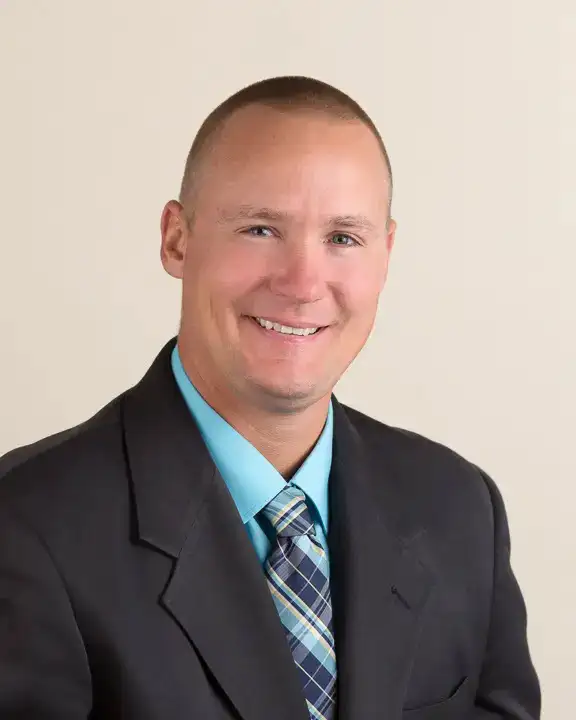
Dr. Jarrod Sadulski is an associate professor in the School of Security and Global Studies and has over 20 years in the field of criminal justice. He holds a bachelor’s degree in criminal justice from Thomas Edison State College, a master’s degree in criminal justice from American Military University, and a Ph.D. in criminal justice from Northcentral University.
His expertise includes training on countering human trafficking, maritime security, mitigating organized crime, and narcotics trafficking trends in Latin America. Jarrod has also testified to both the U.S. Congress and U.S. Senate on human trafficking and child exploitation. He has been recognized by the U.S. Senate as an expert in human trafficking.
Jarrod frequently conducts in-country research and consultant work in Central and South America on human trafficking and current trends in narcotics trafficking. He serves as an expert witness in criminology. Jarrod has provided academic presentations across the United States and in Europe, Southeast Asia, and in Latin America on various criminal justice related topics. Also, he has a background in business development.